
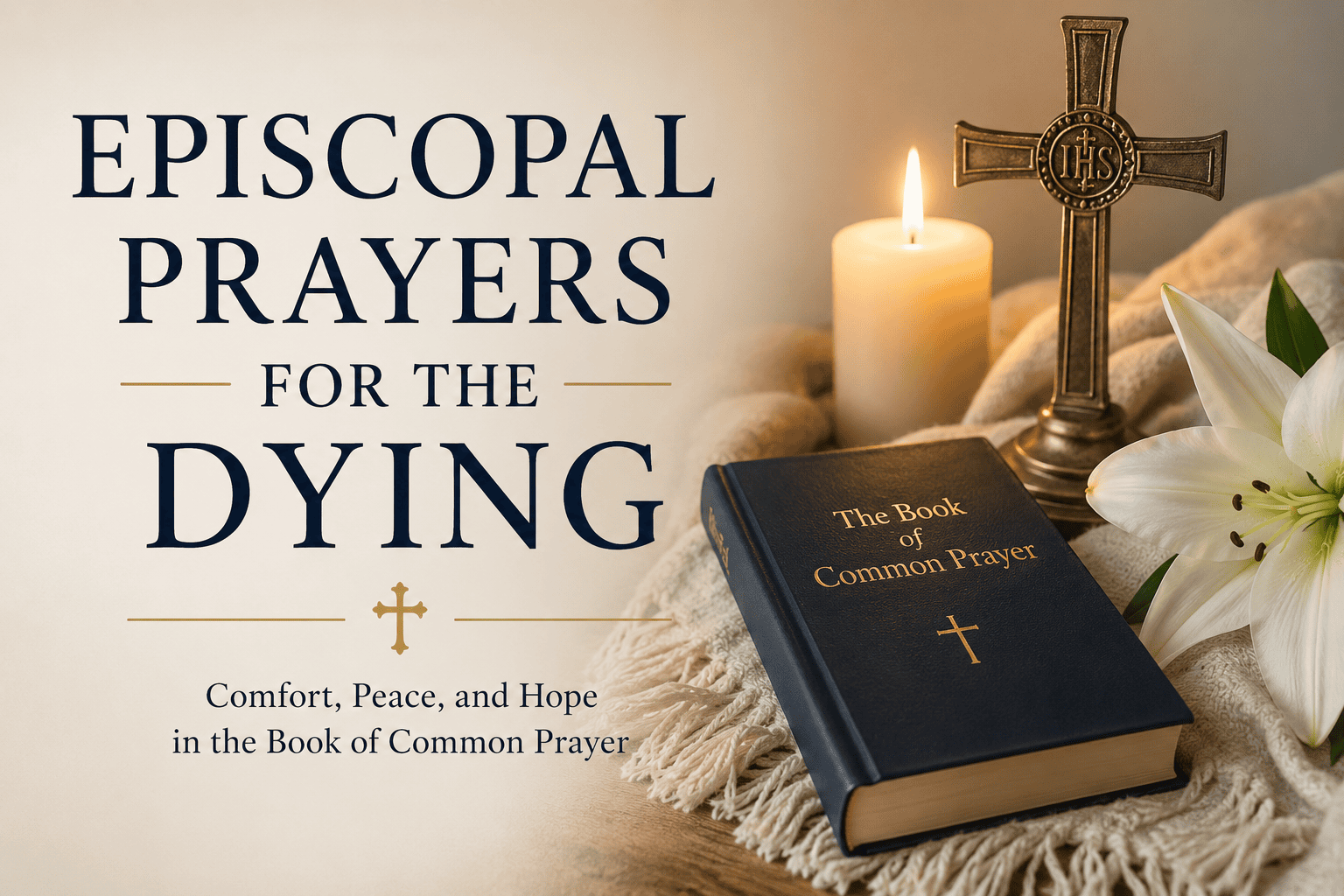
When someone is nearing the end of life, words can be difficult to find. Episcopal prayers for the dying offer a way to place fear, love, uncertainty, and hope before God.
In the Episcopal tradition, prayer at the time of death is not only about the person who is dying; it can also support family members, friends, clergy, and caregivers who are present.
The 1979 Book of Common Prayer includes a specific section called Ministration at the Time of Death, with prayers, a litany, commendation, and prayers that may be used with family and friends. The official online text places this rite on pages 462–467.
The prayers below include original devotional prayers written for this article alongside guidance for finding and using the established Episcopal rites. The original prayers are not presented as official Book of Common Prayer texts.
What Are Episcopal Prayers for the Dying?
Episcopal prayers for the dying are Christian prayers used when a person is approaching death or when loved ones are seeking spiritual support during that time.
The Episcopal Church’s Book of Common Prayer provides a formal Ministration at the Time of Death. It includes a prayer for a person near death, a litany, the Lord’s Prayer, a commendation, and prayers for a vigil.
The purpose is not to promise a particular outcome. Instead, these prayers turn attention toward God’s mercy, Christ’s resurrection, peace, forgiveness, eternal life, and the presence of the Christian community.
The Episcopal Church also describes the rites surrounding sickness and death as pastoral practices that can provide a spiritual and emotional framework for grief and difficult transitions.
A Simple Episcopal Prayer for Someone Who Is Dying
The following is an original devotional prayer, written in an Episcopal Christian style. It is not a quotation from the Book of Common Prayer.
A Prayer for Someone Near Death
Merciful God, stay close to your beloved servant in this sacred and difficult hour.
Surround them with your peace and hold them gently in your love.
Ease their fears, strengthen their heart, and remind them that they are never beyond your care.
Give wisdom and compassion to those who remain beside them.
May the hope of Christ’s resurrection bring comfort, and may your presence give peace.
Through Jesus Christ our Lord. Amen.
This prayer can be read quietly beside a loved one, prayed privately, or shared with family members.
Episcopal Prayer for Comfort and Peace
When someone is dying, family members may not know exactly what to say. A short prayer can provide a simple way to remain present without trying to explain everything.
Original devotional prayer:
A Prayer for Peace at the End of Life
Gracious God,
bring your peace into this room and into every heart gathered here.
Give comfort to the one who is nearing the end of life.
Quiet anxious thoughts and surround them with love.
Give family and friends courage to remain present with tenderness and patience.
When words are difficult, let silence become a place of peace.
Keep us mindful of your love and the hope we have in Christ.
Amen.
This type of prayer can be especially appropriate when the person is unable to participate verbally.
Episcopal Prayer for Family Members
The dying process affects more than the person who is approaching death. Family members may experience sadness, uncertainty, fear, or difficulty accepting what is happening.
Original devotional prayer:
A Prayer for the Family
Loving God,
hold this family close during these difficult hours.
Give them strength when they feel weak, peace when they feel afraid, and patience when emotions become overwhelming.
Help them speak words of love and forgiveness while there is still time to speak.
Give them grace to listen, remember, and remain present with one another.
Comfort them with the assurance that your love is greater than their sorrow.
Through Jesus Christ our Lord. Amen.
The Episcopal tradition provides prayers not only for the person who is dying but also for those who mourn and remain behind. The Book of Common Prayer includes prayers connected with death, burial, and the needs of mourners.
Episcopal Prayer for Commending a Dying Person to God
One of the distinctive elements of the Episcopal rite is the Commendation at the Time of Death. The established rite commends the person into God’s care and speaks of peace and the hope of God’s presence.
For readers who want a new prayer for personal devotion, the following is an original prayer, not an official liturgical text:
A Prayer of Commendation
Merciful God,
we place this beloved person into your loving care.
Receive them with compassion and surround them with your peace.
Forgive what needs forgiveness, heal what needs healing, and let your love be their shelter.
May the hope of Christ remain with them, and may those who love them trust in your mercy.
Keep them in your everlasting care.
Amen.
If a family wants to use the official Episcopal rite rather than an original prayer, the Book of Common Prayer’s Ministration at the Time of Death is the appropriate place to begin.
A Prayer for Someone Afraid of Death
Fear can be part of the experience of approaching death. Prayer does not require someone to hide those feelings. It can simply bring them honestly before God.
Original devotional prayer:
A Prayer for Courage
God of mercy and love,
be near to your servant in this hour.
When fear rises, bring peace.
When uncertainty feels overwhelming, bring courage.
When words fail, let your presence be enough.
Help this beloved person rest in the love of Christ and receive each moment with grace.
Hold them gently in your care.
Amen.
The Episcopal approach to prayers surrounding death centers on God’s care, Christ’s resurrection, mercy, peace, and hope rather than promising that prayer will produce a particular earthly outcome. The church’s pastoral materials explicitly distinguish these rites from promises of a cure.
Scripture Themes for Prayer at the End of Life
Scripture can also provide words for meditation when someone is dying. Rather than treating a particular passage as a guarantee about what will happen, these texts can help Christians reflect on God’s presence and the hope of resurrection.
Psalm 23
Psalm 23 is often associated with God’s guidance and presence through difficult places. Its imagery of the shepherd can provide a peaceful framework for prayer and reflection.
John 14:1–3
In John 14:1–3, Jesus speaks to his disciples about trusting God and prepares them with words of hope concerning God’s presence.
Romans 8:38–39
Romans 8:38–39 emphasizes the conviction that nothing in creation can separate believers from the love of God in Christ Jesus.
1 Corinthians 15
1 Corinthians 15 provides an important Christian treatment of resurrection and the hope connected with Christ’s resurrection.
These passages can be read slowly, used as subjects for meditation, or incorporated into a time of prayer with family members.
When Should You Use Episcopal Prayers for the Dying?
There is no requirement that a person wait until the final moments before seeking pastoral prayer.
If someone is seriously ill or approaching death, family members can contact an Episcopal priest or the person’s congregation. The Book of Common Prayer specifically directs that when someone is near death, the minister of the congregation should be notified so that the church’s ministrations can be provided.
Prayer may be appropriate:
- When a person is seriously ill
- When death appears to be approaching
- When family members gather at the bedside
- Before or during hospice care
- When a person wants spiritual reconciliation or pastoral support
- During a vigil before the funeral
- When family members need words for their own prayers
The Episcopal Church’s chaplain guidance likewise points to ministry with the sick and the Ministration at the Time of Death as appropriate pastoral resources around serious illness and death.
What Is the Episcopal Ministration at the Time of Death?
The Ministration at the Time of Death is an established rite in the Episcopal Church’s Book of Common Prayer.
It includes several components that can be used according to the circumstances, including:
- A prayer for a person near death
- A Litany at the Time of Death
- The Lord’s Prayer
- A collect
- A Commendation at the Time of Death
- A commendatory prayer
- Prayers for a vigil
- Prayers for those who mourn
The rite can therefore support both the person approaching death and the people gathered around them.
The official online text is available through the Book of Common Prayer resource. Episcopal Book of Common Prayer — Ministration at the Time of Death
How to Pray With Someone Who Is Dying
Prayer does not need to be long or complicated. A simple approach can be more appropriate, especially when the person is tired or unable to respond.
1. Create a quiet moment
Reduce unnecessary noise and distractions if possible. Sit nearby and allow the person to rest.
2. Ask permission when appropriate
If the person is able to communicate, you can simply ask, “Would you like me to pray with you?”
3. Keep the prayer gentle
Focus on familiar themes such as God’s love, peace, mercy, forgiveness, Christ, and hope.
4. Allow silence
Prayer does not always require continuous speaking. A few quiet moments can be meaningful.
5. Include the family
If loved ones are present, a short prayer can acknowledge their grief and ask for strength and peace.
6. Contact clergy when appropriate
If the person or family wants the official Episcopal rite, contacting an Episcopal priest is a good next step. The Book of Common Prayer provides specific pastoral forms for these circumstances.
Episcopal Prayers for the Dying and the Hope of Resurrection
Christian prayers at the end of life are closely connected with the belief in Christ’s death and resurrection. The Episcopal burial rites also emphasize resurrection, eternal life, God’s mercy, and the communion of the faithful.
This does not mean that prayer removes grief or makes the experience of death easy. Rather, prayer gives Christians a language for facing mortality while remembering the central promises of their faith.
For someone sitting beside a dying loved one, even a few words may be enough:
“God of mercy, remain near. Give peace to your beloved servant and comfort everyone who is gathered here. Hold us in your love and give us hope in Christ. Amen.”
Frequently Asked Questions
What is the Episcopal prayer for someone near death?
The Episcopal Church’s Book of Common Prayer contains a specific Ministration at the Time of Death, beginning with a prayer for a person near death and continuing with a litany, commendation, and other prayers.
Can a layperson pray with someone who is dying?
Yes. Personal prayer with a loved one does not require clergy. However, if the person or family wants the church’s formal rite or pastoral ministry, they can contact an Episcopal priest or congregation.
What Book of Common Prayer pages contain prayers for the dying?
In the 1979 Episcopal Book of Common Prayer, the Ministration at the Time of Death begins on page 462 and continues through page 467.
What should I pray for someone who is dying?
You can pray for God’s peace, mercy, comfort, presence, courage, and care for the person and their loved ones. You can also read Scripture or use the established Episcopal rite.
Are the prayers in this article official Episcopal prayers?
The prayers specifically labeled original devotional prayers were written for this article and are not official texts from the Episcopal Church. For the authorized liturgical prayers, consult the Book of Common Prayer and speak with an Episcopal priest when appropriate.
A Final Prayer for the Dying
When words are difficult, prayer can offer a simple way to remain present. For Episcopalians, the Book of Common Prayer provides an established language for this sacred moment, while personal prayers can give families room to express their own love, grief, faith, and hope.

The Prayerium Editorial Team creates and reviews thoughtful prayer resources for life’s meaningful moments. Our work covers daily prayers, healing and comfort, protection, family and relationships, gratitude, grief, life challenges, and special occasions. We use research, editorial review, and technology-assisted writing workflows to create clear, respectful, and useful resources for our readers.