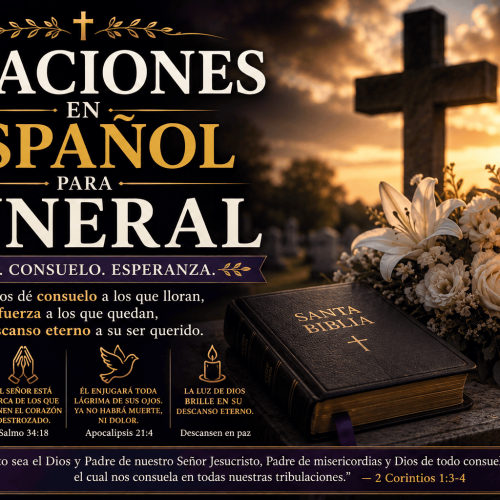

Finding the right words for a funeral can be difficult, especially when grief makes it hard to express what you feel. Poems and prayers for funerals can provide a thoughtful way to honor someone who has died, remember their life, and offer comfort to family and friends.
A funeral reading does not have to be lengthy or elaborate. A short poem may express remembrance, while a prayer can help a faith-based service focus on comfort, hope, and trust in God. The best choice depends on the person being remembered, the type of service, and the beliefs of those attending.
Funeral poetry collections commonly include themes such as grief, memory, love, loss, hope, and consolation. The Academy of American Poets and Poetry Foundation both organize funeral poetry around these themes and different relationships, including parents, spouses, and friends.
Short Poems and Readings for a Funeral
A short reading can be especially appropriate when the service already includes several speakers, Scripture readings, or musical selections.
Here are several well-known works that families may consider:
1. “Remember” by Christina Rossetti
Christina Rossetti’s “Remember” reflects on separation, memory, and the importance of remembering someone after they are gone. It can work well for a memorial service when the family wants a reading centered on love and remembrance.
2. “Nothing Gold Can Stay” by Robert Frost
Robert Frost’s short poem considers how beautiful things can be temporary. Its concise form makes it suitable for a brief funeral reading or memorial program.
3. “Crossing the Bar” by Alfred, Lord Tennyson
Tennyson’s poem uses the image of a journey across the sea. For readers who want a reflective poem about departure and life’s final transition, it can provide a solemn closing reading.
4. “Requiescat” by Matthew Arnold
This poem reflects on death and peace and may suit a service looking for a quiet, traditional literary tone.
5. “Dirge Without Music” by Edna St. Vincent Millay
Millay’s poem gives voice to the difficulty of accepting loss. The Poetry Foundation includes it among poems addressing mourning and remembrance.
Copyright note: Many famous funeral poems remain protected by copyright. For a printed funeral program, website, or public reading, check the copyright status and use an authorized source rather than reproducing a modern poem in full.
Collections such as the Academy of American Poets and Poetry Foundation are useful places to identify appropriate works.
Christian Prayers for a Funeral
For a Christian funeral, prayer can help mourners express sorrow while turning their attention toward God, faith, and hope.
The United States Conference of Catholic Bishops provides prayers for the dead and funeral settings, including prayers for those who mourn and prayers used at the graveside.
The following prayers are original devotional prayers for this article, not quotations from Scripture or an official liturgical text.
6. A Short Prayer for the Deceased
Heavenly Father,
We come before You with grateful hearts for the life of the person we love. Thank You for the memories, kindness, and moments we were blessed to share.
In this time of sorrow, comfort everyone who is grieving. Give us strength for the days ahead and help us hold close the memories that remain.
May Your peace be with this family today and in the days to come.
Amen.
7. A Prayer for Comfort After a Loss
Dear God,
Our hearts are heavy with grief. Please be near to everyone who feels the pain of this loss. Give comfort when memories bring tears, strength when the days feel difficult, and peace when words are hard to find.
Help us support one another with patience, compassion, and love.
May we remember the life we shared with gratitude and continue forward with hope.
Amen.
8. A Prayer for a Funeral Service
Lord God,
As we gather to remember a beloved life, guide our thoughts and words. Help us honor this person with sincerity and gratitude.
Comfort those who mourn, strengthen those who feel overwhelmed, and surround this family with Your peace.
May this time of remembrance bring comfort and remind us of the love that connected us.
Amen.
9. A Prayer at the Graveside
Heavenly Father,
As we say farewell, remain close to those who are grieving. Give us courage to face this moment and peace as we carry this loss forward.
Thank You for the life we remember today and for the memories that will remain with us.
Hold this grieving family in Your care and guide them through the days ahead.
Amen.
10. A Prayer for Family and Friends
God of comfort,
Bless every family member and friend who is mourning. Give each person space to grieve and people who will listen, care, and walk beside them.
When sadness feels especially strong, provide peace and strength. Help us honor the person we have lost by remembering their life with love and gratitude.
Amen.
Bible Passages Often Used at Christian Funerals
Scripture can provide an important foundation for a Christian funeral. In Catholic funeral rites, for example, Scripture readings are an essential part of the Liturgy of the Word, while nonbiblical readings may be used in certain prayer services with the family.
Several passages are particularly relevant to themes of grief, comfort, trust, and hope.
Psalm 23
Psalm 23 is one of the best-known passages associated with comfort during difficult times. The psalm describes God as a shepherd who guides and cares for His people. The USCCB lists Psalm 23 among the responsorial psalms used for Masses for the Dead.
Psalm 34:18
This verse is often turned to when discussing God’s nearness to people who are experiencing deep sorrow.
John 11:25–26
Jesus’ words about resurrection and life make this passage particularly relevant to Christian reflections on death and hope.
Romans 8:38–39
This passage emphasizes that neither death nor life can separate believers from the love of God.
2 Corinthians 5:8
This verse is frequently referenced in Christian discussions of death and being with the Lord. The USCCB also cites it in its explanation of the Christian meaning of death.
Poems for Different Funeral Situations
The relationship between the person who died and the reader can influence the best choice.
| Situation | Suitable focus |
|---|---|
| Funeral for a parent | Gratitude, family memories, love |
| Funeral for a spouse | Love, companionship, remembrance |
| Funeral for a friend | Friendship, shared memories, appreciation |
| Funeral for a grandparent | Family heritage, wisdom, gratitude |
| Funeral for a young person | Love, remembrance, grief, hope |
| Memorial service | Celebration of life and meaningful memories |
| Christian funeral | Faith, comfort, Scripture, hope |
| Nonreligious service | Memory, relationships, love, reflection |
The Poetry Foundation similarly groups funeral poems according to general mourning and specific relationships, including friends, parents, and spouses.
How to Choose the Right Funeral Poem
The most meaningful poem is usually the one that fits the person and the tone of the service rather than simply being the most famous funeral poem.
Consider these questions:
What kind of service is it?
A church funeral may call for a Scripture-centered reading alongside a poem. A secular memorial may be better suited to poetry about memories, relationships, nature, or life.
What relationship did you have with the person?
A poem about friendship may feel more appropriate for a close friend, while a reading about family or lifelong companionship may better fit the funeral of a parent or spouse.
What tone feels appropriate?
Some poems focus directly on grief. Others emphasize remembrance, gratitude, peace, or hope. Think about what you want the reading to communicate to the people listening.
How long should it be?
A short reading can be powerful. If several people are speaking, choosing a concise poem may help maintain the flow of the service.
Is the reading appropriate for the audience?
Consider the age, beliefs, cultural background, and wishes of the family. A reading should provide comfort rather than create unnecessary discomfort or confusion.
How to Choose a Funeral Prayer
A funeral prayer can serve a different purpose from a poem. A poem may express emotion or remembrance, while a prayer directly addresses God.
For a Christian funeral, you might choose a prayer that focuses on:
- Comfort for grieving family members
- Gratitude for the person’s life
- Strength during bereavement
- Trust in God
- Christian hope
- Peace for those who mourn
- Remembrance and thanksgiving
Official Christian funeral resources also emphasize prayer, Scripture, hope, and care for those who mourn.
Poems and Prayers for a Funeral Program
A funeral program often needs shorter pieces that can fit naturally alongside the person’s name, obituary, order of service, or photographs.
Good options include:
- A short funeral poem
- A brief prayer for comfort
- A meaningful Bible passage
- A short remembrance verse
- A closing prayer
- A line expressing gratitude for the person’s life
If the program is for a Christian service, coordinate the selection with the officiant or church when appropriate, particularly if the reading is intended to be part of a formal liturgy.
A Short Original Funeral Prayer for a Loved One
Lord,
Thank You for the life we remember today. Thank You for the love shared, the memories created, and the moments that will remain in our hearts.
Comfort everyone who mourns. Give us strength when grief feels heavy and peace when we struggle to find the right words.
Help us remember with gratitude, support one another with compassion, and move forward with hope.
Amen.
Funeral Poems vs. Funeral Prayers
Although both can be meaningful, they serve different purposes.
| Funeral poem | Funeral prayer |
|---|---|
| Expresses emotions and memories | Addresses God directly |
| May be religious or secular | Usually connected to a faith tradition |
| Can focus on grief, love, or remembrance | Can ask for comfort, strength, peace, or hope |
| Often read aloud during a service | May be used at different points in a faith-based service |
| Can be literary or personal | Can be traditional, scriptural, or newly written |
Using both can create a balanced service: a poem can give language to grief and memory, while prayer can express faith and dependence on God.
What Should You Read at a Funeral?
If you need a simple starting point, choose according to the purpose of the reading:
- For remembrance: Choose a poem about memory and love.
- For grief: Choose a poem that honestly acknowledges loss.
- For Christian hope: Consider a Bible passage and a prayer centered on faith.
- For a short service: Select a brief poem or prayer.
- For a memorial program: Use a concise reading that fits naturally on the printed page.
- For a family gathering: An original prayer can provide a personal way to express gratitude and comfort.
There is no single poem or prayer that is right for every funeral. A meaningful selection is one that respects the person who died, reflects the family’s beliefs and wishes, and gives those present words for emotions that may otherwise be difficult to express.
Frequently Asked Questions
What is a good poem to read at a funeral?
Popular choices include Christina Rossetti’s “Remember,” Robert Frost’s “Nothing Gold Can Stay,” Alfred, Lord Tennyson’s “Crossing the Bar,” and other poems about grief, remembrance, and loss. The best choice depends on the relationship, service style, and desired tone. The Academy of American Poets and Poetry Foundation provide broader funeral-poetry collections.
What is a good short prayer for a funeral?
A simple prayer can thank God for the person’s life, ask for comfort and strength for those who mourn, and express hope according to the family’s Christian beliefs. It does not need to be lengthy to be meaningful.
Can I use a poem at a Christian funeral?
Yes, poetry can be used alongside religious readings, depending on the service and the wishes of the officiant and family. In Catholic funeral liturgy, however, biblical readings have a specific place in the Liturgy of the Word and cannot simply be replaced by nonbiblical readings.
What Bible passage is suitable for a funeral?
Psalm 23, John 11:25–26, Romans 8:38–39, and other passages addressing God’s presence, comfort, resurrection, and hope may be appropriate. The specific selection should fit the family’s tradition and the funeral service.
Should a funeral poem be religious?
Not necessarily. Funeral poetry can be religious, spiritual, or secular. Choose a reading that respects the beliefs and wishes of the person being remembered and their family.
Final Thoughts
Poems and prayers for funerals can help families find words during one of life’s most difficult moments. A carefully chosen poem can preserve memories and express grief, while a prayer can give a Christian service a meaningful focus on God, comfort, and hope.
The Church of England’s official funeral resources also provide guidance on prayers and Bible readings that may be suitable for funeral services.
Whether you choose a classic poem, a Bible passage, a traditional prayer, or an original devotional prayer, the most important consideration is whether the words genuinely fit the person and the people gathered to remember them.
A simple, sincere reading can be enough to honor a life and bring people together in remembrance.

The Catholic Prayer Editor focuses on prayer resources connected with Catholic devotional life and tradition, including prayers to saints, the Rosary, Mary, Catholic Scripture reflections, Mass-related prayers, and prayers for important moments in life. Content is prepared with an emphasis on respectful and accurate representation of Catholic traditions.